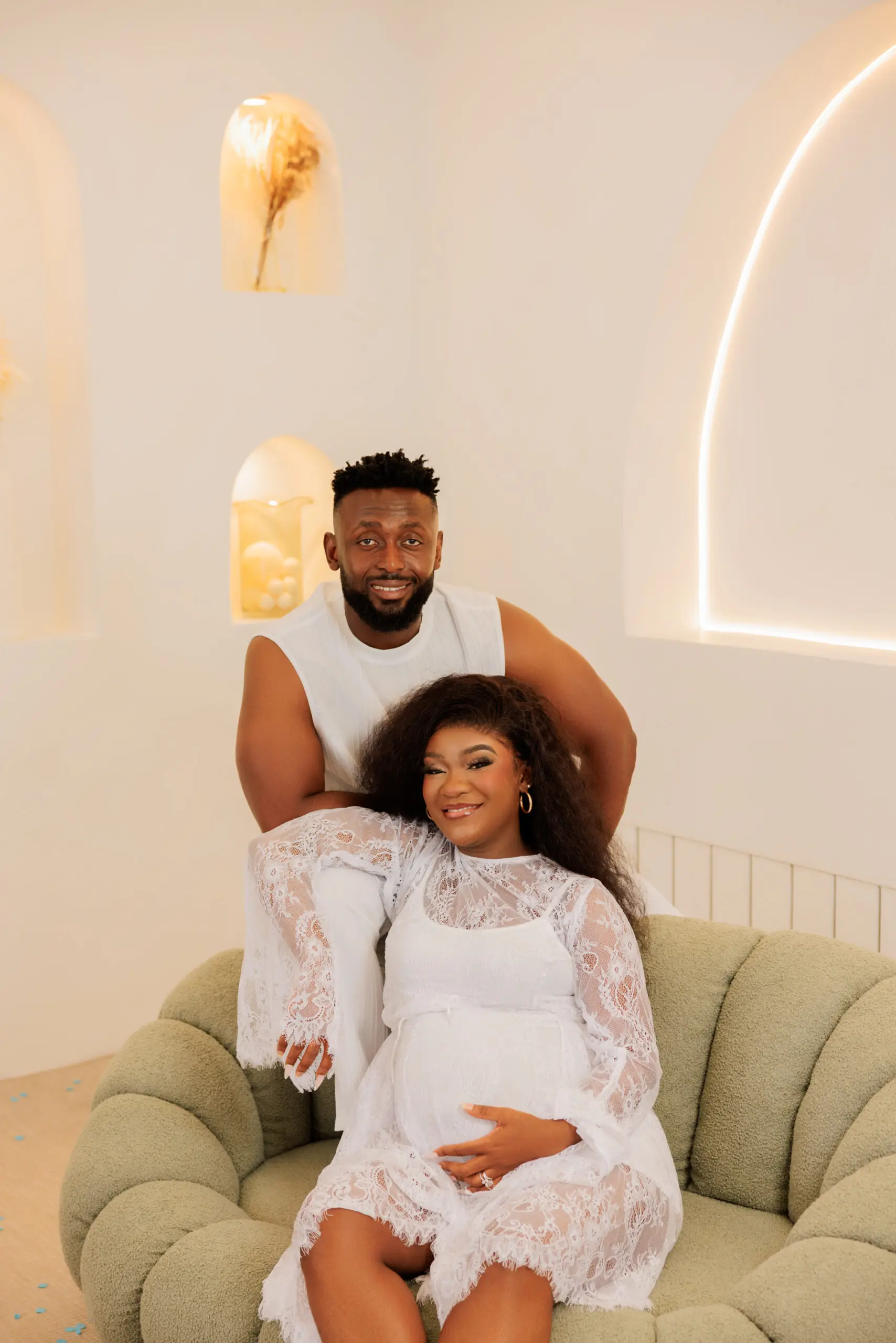
Preparing for a maternity photoshoot comes down to four things: timing, outfits, comfort and a simple plan for who’s in the photos. Get those right and your session feels relaxed instead of rushed. You don’t need to know how to pose or arrive with a perfect mood board. Your photographer guides you through all of that on the day.
Every pregnancy is different. If your midwife or GP has given you advice about activity, standing or travel, follow it first and let us know when you book.
The short answer
Book for around 28 to 34 weeks, choose two or three outfits that show your bump and decide who’s joining you. Pack for comfort: water, snacks, flat shoes and a robe or cardigan between looks. Arrive a little early, then leave the posing to us.
Plan your looks
- Choose two or three strong outfits. Fewer looks means more time to photograph each one properly.
- Show the bump. Fitted dresses, stretch fabrics and flowing gowns all work. Very loose tops hide the shape you came to photograph.
- Try the studio gowns. A collection of maternity gowns is available for selected sessions, so you can mix them with your own outfits.
- Keep colours simple. Solid colours and soft neutrals keep the attention on you. Busy prints and large logos compete for it.
- Coordinate, don’t match. If your partner or children are joining, choose a shared colour palette instead of identical outfits.
- Sort the underwear. Bring nude underwear and a strapless bra for fitted and off-the-shoulder looks.
Prepare for comfort
- Eat before you arrive. A proper meal keeps your energy up through outfit changes and posing.
- Bring water and snacks. Short breaks are part of the session, not a delay.
- Travel in loose clothes. Tight waistbands and socks can leave marks that show on bare skin.
- Pack flat shoes. Save heels for the photographs that need them.
- Tell us what doesn’t feel right. If standing, kneeling or lying down is uncomfortable, we adjust the pose. Comfort always comes first.
Plan the people and the photos
- Decide who’s in the frame. Solo, with your partner, with your children or the whole family. Tell us when you book so we can plan time for each.
- Start with your solo portraits. We photograph the core maternity portraits first while you’re fresh, then add your partner and children.
- Bring two or three references. A few screenshots of poses or moods you love is plenty. You don’t need a full Pinterest board.
- Bring something meaningful. A scan photo, a tiny pair of shoes or a sibling’s favourite toy. One or two items work better than a bag full.
- Prepare the children. Tell them what’s happening, pack their favourite snack and choose a time that works around naps.
“The best preparation isn’t a perfect plan. It’s arriving rested, fed and comfortable enough to enjoy it.”
What to bring on the day
| Item | Why it helps |
|---|---|
| Outfits on hangers | They arrive crease-free and are quick to change into |
| Nude underwear and a strapless bra | Invisible under fitted and off-the-shoulder looks |
| Flat shoes | Comfortable between shots |
| Robe or cardigan | Warmth and cover between outfits |
| Water and snacks | Keeps your energy steady |
| Hair ties and touch-up makeup | Quick fixes between looks |
| One or two meaningful items | A scan photo, baby shoes or a letter to your baby |
| Children’s essentials | Snacks, a favourite toy and a spare outfit |
What to do if things don’t go to plan
- You feel unwell or too tired on the day: Contact us as early as you can so we can talk through your options.
- An outfit doesn’t fit or feel right: Switch to a studio gown or move straight to your next look. Packing one backup helps.
- The children won’t cooperate: Take a break, bring out the snacks and photograph your solo portraits first. Some of the best family images happen after a reset.
- You feel awkward in front of the camera: That’s normal. Your photographer guides your posture, hands and expression, and most people relax once they start moving.
- The weather turns before an outdoor shoot: Get in touch to discuss a new date or switching to a studio session.
- You’re running late: Call or WhatsApp us on the way so we can adjust the plan.
The AOU Studio planning approach
We plan every maternity session in layers, so nothing important gets squeezed out.
- Before the shoot: You choose your session length, outfit changes and images when you book, then use our guides to plan your looks.
- On the day: We start with your core maternity portraits while you’re fresh, then bring in your partner and children.
- After the shoot: You review your gallery, choose the images you’d like professionally edited and receive them digitally.
Common mistakes to avoid
- Mistake: Packing five or six outfits. Better: Two or three looks you genuinely love.
- Mistake: Leaving it too late to book. Better: Book in your second trimester for a session around 28 to 34 weeks.
- Mistake: Travelling in tight clothes. Better: Loose layers, so no marks show on camera.
- Mistake: Skipping a meal before the shoot. Better: Eat properly and bring snacks.
- Mistake: Matching everyone head to toe. Better: A shared colour palette with different outfits.
- Mistake: Trying to script every pose. Better: Bring two or three references and let us guide the rest.
Practical checklist
- Session booked for around 28 to 34 weeks
- Outfit changes added to your booking
- Two or three outfits chosen and steamed
- Nude underwear and a strapless bra packed
- Flat shoes, robe or cardigan packed
- Water and snacks ready
- Two or three reference images saved
- Meaningful items packed
- Partner and children’s outfits coordinated
- Loose clothes for the journey
- Studio address and arrival time confirmed
Nottingham-specific notes
- Two studio locations: Our maternity studio is at 9 High Street, Hucknall, NG15 7HJ, a short drive from Nottingham city centre. Our second location is The Victoria Works, Ball St, NG3 3AR. Check which one your booking is at.
- Changing space on site: The studio has changing facilities and is set up before you arrive, so you can travel in comfortable clothes and change there.
- Coming from further out: Mums travel to us from across Nottinghamshire, Mansfield, Arnold, West Bridgford, Beeston, Derby, Leicester and the wider East Midlands. Allow extra time for traffic so you arrive calm.
- Planning an outdoor shoot: Weather in the East Midlands can change quickly, so have a backup date or studio option in mind.
Before publishing: add parking details for each studio.
How AOU Studio approaches this
We don’t expect you to arrive as a model. We expect you to arrive as yourself, maybe a little tired, maybe a little nervous, and that’s fine. Our job is to shape the light, guide every pose and keep the session moving at a pace that suits your body. Your job is to enjoy this chapter. The preparation above simply makes that easier.
Frequently asked questions
How far in advance should I book my maternity photoshoot?
Book during your second trimester. That gives you the best chance of securing your preferred date in the 28 to 34 week window.
How many outfits should I bring?
Two or three. You can add outfit changes when you build your booking, and our maternity gowns are available for selected sessions.
Can my partner and children join the session?
Yes. We can plan a mix of solo, couple and family portraits. Let us know who’s coming when you book.
What if I don’t know how to pose?
You don’t need to. Your photographer guides your posture, hands, angles and movement throughout the session.